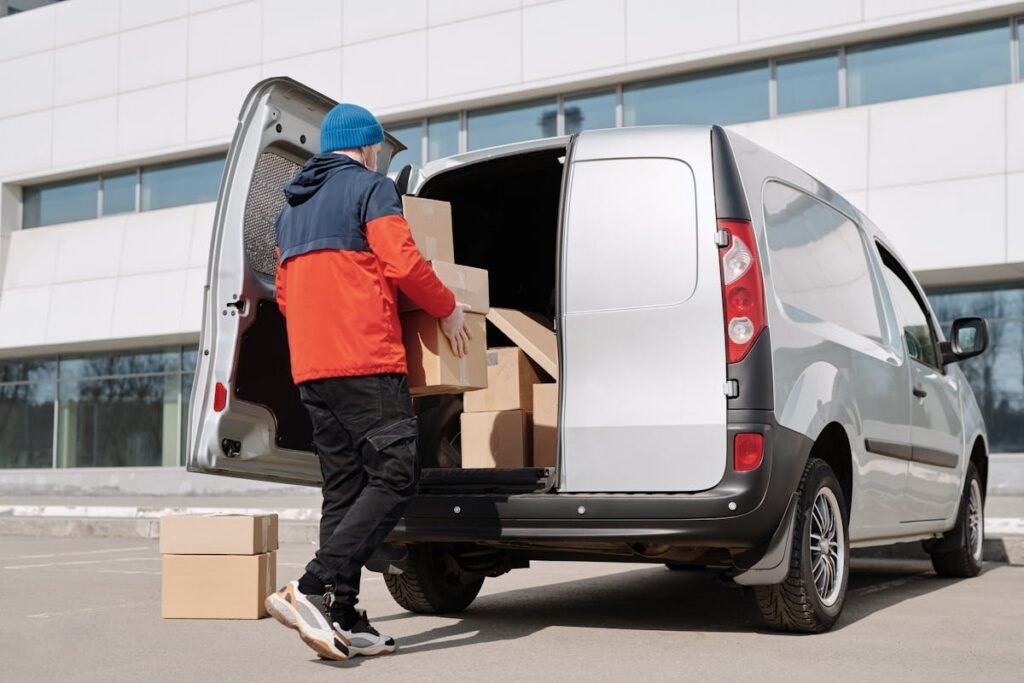
You’re hustling, making good money shopping and delivering for Instacart, and that’s awesome. But then tax season rolls around, and suddenly that sweet gig income feels a little… complicated. Sound familiar? Trust me, I’ve been there. The first year I filed taxes as a gig worker, I felt completely lost, staring at a mountain of receipts and a blank Schedule C.
Here’s the thing: as an Instacart shopper, you’re not just an employee; you’re a small business owner. That’s right, a bona fide entrepreneur! And with that comes the incredible power of tax deductions. Uncle Sam actually *wants* you to deduct your legitimate business expenses because it accurately reflects your net income. But if you don’t track them, you’re literally leaving money on the table – money that could be in your pocket, not sent to the IRS.
This complete guide for 2026 is going to walk you through everything you need to know about Instacart shopper tax deductions. We’ll cover what you can deduct, how to track it all, and what forms you’ll be dealing with. My goal here at SideHustleCents.com is to help you feel confident and in control when tax time comes, so let’s dig in!
Key Takeaways for Instacart Shopper Taxes (2026)
- As an Instacart shopper, you’re a self-employed independent contractor, not an employee.
- You’ll likely receive a Form 1099-K if you earn $600 or more in 2026.
- Your primary tax form will be Schedule C (Form 1040) to report income and expenses.
- The standard mileage deduction (expected around 68 cents per mile for 2026) is usually your biggest deduction.
- You’ll pay self-employment tax (Social Security and Medicare) and potentially estimated quarterly income taxes.
- Diligent record-keeping is non-negotiable for maximizing deductions and avoiding IRS headaches.
Understanding Your Tax Status: You’re a Business, Baby!
First things first: Instacart (and platforms like DoorDash or Shipt) considers you an independent contractor, not an employee. This is a crucial distinction for tax purposes. It means:
1. **No Withholding:** Instacart doesn’t withhold income tax, Social Security, or Medicare from your pay. That’s all on you.
2. **Self-Employment Tax:** You’re responsible for both the employer and employee portions of Social Security and Medicare taxes, collectively known as self-employment tax. For 2026, this will be 15.3% on your net earnings (up to a certain income threshold for Social Security, with Medicare having no limit). Don’t worry, you get to deduct half of this on your Form 1040!
3. **Deductible Expenses:** This is the good part! You can deduct all “ordinary and necessary” business expenses, which reduce your taxable income.
What to Expect from Instacart: Your 1099-K (2026)
For 2026, the IRS is expected to require platforms like Instacart to issue a Form 1099-K if you earn $600 or more through their platform. This threshold has been a bit of a moving target, but for now, assume $600 is the magic number. This form reports your gross earnings, not your net after Instacart’s fees. It’s just an informational document, but it’s what the IRS sees as your income source. Keep it safe!
Your Biggest Deduction: Car & Mileage Expenses
Honestly, for most Instacart shoppers, your vehicle is your office, your warehouse, and your delivery truck. This means car-related expenses are usually your largest deduction. The IRS gives you two main ways to deduct vehicle costs:
1. The Standard Mileage Rate (My Go-To!)
This is typically the easiest and most common method. For 2026, while the official rate is usually announced late in the preceding year, we can expect it to be in the ballpark of the 2025 rate, which for illustrative purposes, we’ll assume is around 68 cents per mile (a slight increase from 2024’s 67 cents).
**How it works:** You track every business mile driven for Instacart (from your home to your first store, between stores, to customer deliveries, and back home). Then, you multiply your total business miles by the standard mileage rate. This covers gas, oil, maintenance, depreciation, and insurance.
**Why I recommend it:** It’s simple. Track miles, multiply, deduct. No need to keep every single gas receipt. Just make sure your mileage log is impeccable. According to IRS Publication 463, you need a contemporaneous log – a fancy way of saying “record it as you go.”
**Example:** If you drive 15,000 business miles in 2026, your deduction would be 15,000 miles * $0.68/mile = $10,200! That’s a significant chunk off your taxable income.
2. Actual Expenses Method
This method requires you to track *all* your actual vehicle expenses, including:
* Gas and oil
* Repairs and maintenance
* Tires
* Insurance premiums
* Vehicle depreciation (a complex calculation!)
* Vehicle registration fees
* Lease payments (if applicable)
You’d then multiply the total of these expenses by the percentage of miles you drove for business versus personal use.
**When to consider it:** This *might* make sense if you have a very expensive car, high repair costs, or exceptionally low mileage. However, it’s a lot more work, requiring meticulous record-keeping for every single car-related expense. For most gig workers, the standard mileage rate saves a ton of hassle.
**Crucial Advice:** You cannot use both methods for the same vehicle in the same year. Choose one and stick with it! And for new vehicles, if you choose actual expenses in the first year, you’re locked into it for that vehicle’s life. If you choose standard mileage, you can switch to actual expenses later, but you’ll have to use the straight-line depreciation method. Seriously, just use mileage.
Other Common Instacart Shopper Deductions
Beyond your vehicle, plenty of other expenses chip away at your taxable income. Here’s a rundown:
1. Phone and Internet Expenses
Your smartphone is indispensable for Instacart. You use it for the app, GPS, communicating with customers, and checking store inventory.
* **Deduction:** You can deduct a portion of your monthly phone bill and internet bill (if you use your home internet for business tasks like reviewing earnings or managing your schedule).
* **How to calculate:** Determine the percentage of time you use your phone for business versus personal use. Be realistic! If you use it 50% for Instacart, deduct 50% of your bill.
2. Insurances
* **Car Insurance:** If you’re using the actual expenses method, your premiums are deductible. If you’re using standard mileage, it’s covered.
* **Health Insurance Premiums:** If you’re self-employed and not eligible for health insurance through an employer (or your spouse’s employer), you can often deduct your health insurance premiums. This is an “above the line” deduction, meaning it reduces your AGI. This connects to understanding Grubhub Delivery Driver Taxes Explained, as health insurance is a common deduction for all gig workers.
3. Shopping Supplies & Equipment
Think about what you buy specifically for your Instacart business:
* Insulated bags/coolers (essential for keeping groceries fresh!)
* Hand truck or collapsible cart
* Phone mount for your car
* Portable phone charger and cables
* GPS device (if separate from your phone)
* First aid kit (good for safety, too!)
* Pens, notebooks (for tracking orders, if you’re old school like me sometimes)
* Cleaning supplies for your car (to keep it professional for deliveries)
4. Professional Fees & Software
* **Tax Preparation Fees:** The cost of hiring a tax professional (like a CPA) to help with your Schedule C is deductible.
* **Mileage Tracking Apps:** Subscriptions to apps like Stride, Everlance, or Hurdlr are fully deductible.
* **Other Business Software:** Any software subscriptions used specifically for your Instacart business (e.g., accounting software).
5. Home Office Deduction (Tricky, But Possible)
If you have a dedicated space in your home *exclusively and regularly* used for your Instacart business (e.g., an office where you manage receipts, plan routes, or communicate with Instacart support), you might qualify.
* **Two methods:**
1. **Simplified Method:** $5 per square foot of home used for business, up to 300 square feet (maximum $1,500 deduction). This is usually the easiest.
2. **Regular Method:** Deduct a percentage of actual home expenses (rent/mortgage interest, utilities, insurance, repairs). This is more complex and requires careful calculation based on the square footage of your office vs. your entire home.
**Word of caution:** The “exclusive and regular” rule is strict. If your “office” is also your dining room table where you eat dinner, it probably won’t qualify.
6. Self-Employment Tax Deduction
Remember that 15.3% self-employment tax? The good news is you get to deduct one-half of what you pay in self-employment taxes. This is an “above the line” deduction on your Form 1040, meaning it reduces your Adjusted Gross Income (AGI).
7. Parking Fees & Tolls
Any parking fees or tolls you incur while on an Instacart delivery are 100% deductible. Keep those receipts! These are separate from your mileage deduction.
8. Education & Training
Did you take a course on optimizing your Instacart routes, customer service, or even basic accounting for your gig business? If it enhances your skills as an Instacart shopper, it might be deductible.
Record Keeping: Your Best Friend for Tax Season
I cannot stress this enough: **track everything!** This is where most gig workers slip up. The IRS doesn’t just take your word for it; they want proof.
* **Mileage:** Use a dedicated mileage tracking app (Stride, Everlance, Hurdlr are popular choices) or a simple spreadsheet. Log start and end points, dates, and business purpose.
* **Receipts:** For every other expense, keep digital copies. Snap a photo with your phone and store it in a cloud folder (Google Drive, Dropbox) or use an expense tracking app (QuickBooks Self-Employed, Expensify).
* **Bank Statements:** Reconcile your business expenses with your bank statements. Consider opening a separate bank account for your Instacart income and expenses. It makes tracking *so* much easier. This is also covered in Doordash Driver Tax Deductions Full Guide, as it’s a universal best practice.
Filing Your Taxes: Forms You’ll Need
As an Instacart shopper, you’ll primarily be dealing with these forms:
* **Form 1040:** Your main individual income tax return.
* **Schedule C (Form 1040), Profit or Loss from Business:** This is where you report your Instacart income and deduct all your business expenses. The result (your net profit) flows directly to your Form 1040.
*